
The Times, 6th June 2022 - The Future of Warfare - 16 Downloads
The Times - The Future of Warfare
6th June 2022, David A Rew, Consultant Surgeon
Sir, Further to the Ajax story (Tom Foulkes, Letters, 4th June), even the most casual observer of events in Ukraine may now be able to offer a new definition of an Armoured Vehicle; an item of military equipment which vaporises its crew and throws its turret up to 120 feet on contact with the enemy.
We are facing an existential change in the nature of mechanised warfare.
The greater question for the strategists may now be how many suitably adapted quad bikes and swarming drones we could purchase for £5.5 billion, rather than how to improve the weld quality of the next generation of platinum plated infantry fighting vehicles.
Yours
David Rew QVRM TD MA MB MChir FRCS
Colonel (Retd) Army Reserve
Background
The stories of poorly run and hugely expensive UK military equipment procurement programmes are seemingly never-ending, among which the story of the Ajax Infantry Fighting Vehicle (IFV) has become a legend in its own lunchtime.
IFVs have been the bread and butter of armoured warfare for almost a century, and the efficient manufacture of battlefield taxis should be pretty basic stuff for an advanced manufacturing country. Back in 2022, the early waves of drone warfare were already demonstrating the triumph of simple, cheap and effective weaponry in bulk over expensive, vulnerable and gold plated systems. The Russians were losing thousands of armoured vehicles to clever and brave Ukrainian battlefield tactics.
On Friday 3rd June 2022, The Times published the following article by Larissa Brown
Fix these tanks or scrap them, say MPs
Larisa Brown - Defence Editor
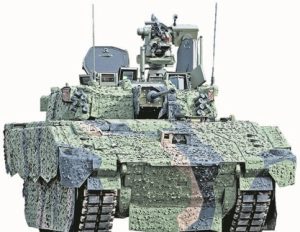
Image: Tests of the Ajax light tank have affected hearing
“The army’s light tank programme has “gone badly wrong” and must be fixed or scrapped before more money is wasted and there are further risks to national security, MPs have warned.
A report by the public accounts committee (PAC) found that repeated failures over the £5.5 billion Ajax contract had put strain on older capabilities and “directly” threatened the safety of troops, as well as the ability of the Ministry of Defence to protect the nation.
“Enough is enough — the MoD must fix or fail this programme, before more risk to our national security and more billions of taxpayers’ money are wasted,” Dame Meg Hillier, the Labour chairwoman of the committee, said.
Jeremy Quin, the defence procurement minister, told The Times last month that Ajax “remains a troubled programme but we are persevering”. He said: “We really want this to work.”
Lieutenant General Sir Chris Tickell, deputy chief of the general staff, said he was “cautiously optimistic” although he added: “There are plenty of hurdles to get through.”
However, the PAC report painted a bleak picture, saying the MoD had “once again made fundamental mistakes in its planning and management of a major equipment programme”.
It said the department was “failing to deliver the enhanced armoured vehicles capability that the army needs to better protect the nation and meet its Nato commitments”.
The report noted that the programme had been running for 12 years “but has not yet delivered a single deployable vehicle to the army”.
It said the Ajax programme, which began in 2010 and “intended to transform the army’s surveillance and reconnaissance capability”, had “gone badly wrong”.
More than £3.2 billion has already been paid to the UK arm of the defence giant General Dynamics for the vehicle although only a few dozen have been delivered out of the 589 ordered.
Further payments for the £5.5 billion programme have been suspended.
The programme has been beset by delays. Trials were suspended indefinitely over health and safety concerns after troops reported hearing problems and other issues with their joints due to noise levels and vibrations.
More than a year behind the revised schedule, slow progress and continued delays had created “significant risks to value for money, put at risk the army’s plans for transformation and mean soldiers will have to use existing outdated vehicles for longer”, MPs said.
The MoD and General Dynamics are also in dispute over payment.
Hillier added: “The MoD has made fundamental mistakes in its planning and management of this project. The Ajax tanks programme has been deeply flawed from the outset and the PAC now seriously doubts it can be recovered within existing costs and commercial arrangements.”
Ministers have admitted previously that 310 people were exposed to noise and vibration problems during trials of the vehicle. A small number have been discharged because of hearing loss.
Yet nearly two years after identifying the injuries to soldiers, the MoD still does not know how to fix the problems.
Last month it emerged that more troops may have suffered hearing problems after trials resumed on the Ajax light tank for several days last month before the army was forced to pause the tests for at least the third time.
The latest trials also raised a new issue on the “effectiveness of the internal communications system which requires additional analysis”, Quin added.
John Healey, Labour’s shadow defence secretary, said: “Ajax is the biggest defence procurement failure for a decade. With ministers dragging out the decision to scrap or stick Ajax, more personnel have now been potentially put in harm’s way.”
On Saturday 4th June, The Times published the following letter from Retired Brigadier Tom Foulkes, Royal Engineers.
Tank troubles
Sir, The public accounts committee is right to insist that the Ministry of Defence get a grip on the ailing Ajax programme (“Fix these tanks or scrap them, say MPs”, Jun 3). Since we have been successfully producing armoured vehicles and their associated equipment for more than 100 years, Ajax’s problems cannot lie in design.
They must therefore be a matter of manufacturing and production quality. That sounds very much like British Leyland in the 1970s, whose antiquated production methods rendered it highly unreliable and vastly inferior to the advanced techniques of the rapidly emerging Japanese car industry. Perhaps it is time for the MoD procurement authorities to swallow their pride and seek help from top experts in the global automotive industry.
Tom Foulkes Fleet, Hants
I assumed that Brigadier Tom’s letter had closed down this particular debate at the time, so I was pleasantly surprised when my own letter on the topic was also published two days later. It must have been a quiet weekend at the Time Letters Editorial Office!
The Sequel
At the time of writing in May 2026, the problems of Ajax have still not been solved despite what have now risen to £6.2 Bn of development costs, as evidenced in the following Times article of 29th April 2026.
As a Reserve Army Officer of 42 years service, I well recognise the lost opportunity costs of modernisation and force regeneration from such white elephant programmes which seem to be an endemic product of the UK defence contracting and funding system.
Ajax trials resume after cold weather blamed for sickness
Larisa Brown - Defence Editor
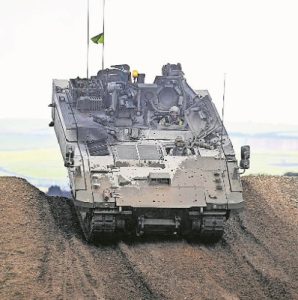
Image: An Ajax Ares armoured vehicle takes part in trials at Bovington Camp in Dorset
“Trials on the Ajax armoured fighting vehicles will resume after investigators found cold weather may have been a factor that made soldiers sick during war games on Salisbury Plain.
Luke Pollard, the minister for defence readiness, said the £6.3 billion programme would push ahead with “strict new controls” on use of the vehicles.
In a twice-delayed update to parliament, he said a safety investigation had found there was “no single causal mechanism” of symptoms reported by soldiers.
He said technical problems related to the vehicle conditions — such as incorrect track tensions and loose or missing engine deck bolts — were a likely cause.
Environmental and human factors were also probably to blame, including a lack of training, cold exposure and air quality within the Ajax vehicle itself.
The report found some of the vehicle conditions meant there was a danger that carbon monoxide poisoning could occur. It is understood that no hazardous levels of fumes were identified.
The Ministry of Defence did not provide a briefing on the written ministerial statement, published yesterday in the week before local elections, despite planning a briefing in March when the original statement was expected. The briefing would have enabled journalists to ask questions about the programme, which has been marked by years of delays, suspensions to trials and safety issues concerning dozens of troops.
Ministers were told that cancelling it would have cost hundreds of jobs in traditional Labour heartlands in Wales.
The British Army was forced to pause tests of the fighting vehicle in November after dozens of soldiers fell sick during exercise Titan Storm. Soldiers emerged from the £10 million vehicles vomiting, while others were said to be shaking so violently that they could not control their bodies, sources said. Others had weakness in their legs.
The exercise took place three weeks after Pollard declared the vehicle was ready for operations, based on written assurances from senior military officials that it was “demonstrably safe”.
Pollard said yesterday he had agreed to restart the acceptance of vehicles from General Dynamics, the manufacturer. He added: “However, I accept that the experience for our soldiers using Ajax has not been good enough and that is not acceptable. I have implemented strict new controls on the reintroduction of the Ajax vehicles that is focused on providing a significantly improved user experience.”
Temperatures during the exercise dipped to about 5C and it was raining, which a defence source said added to the problems because soldiers were sitting in the vehicles for long periods.
Trials will restart on other vehicles — the current version of Ajax — and a limited number of vehicles will be used “under very controlled circumstances and maintenance regimes”, Pollard said. In a second phase, the vehicles would be fitted with improvements.
Mark Francois, the shadow defence minister, said: “We have been saying for months that ministers must finally fix Ajax or fail it - but this delayed, vague statement doesn’t confirm they have done either.”
A spokesman for General Dynamics said: “GD UK has confidence in the performance and protection Ajax is designed to provide.”
A report from an independent expert panel review is due soon”.